Introduction: Understanding the Holy Book of Islam
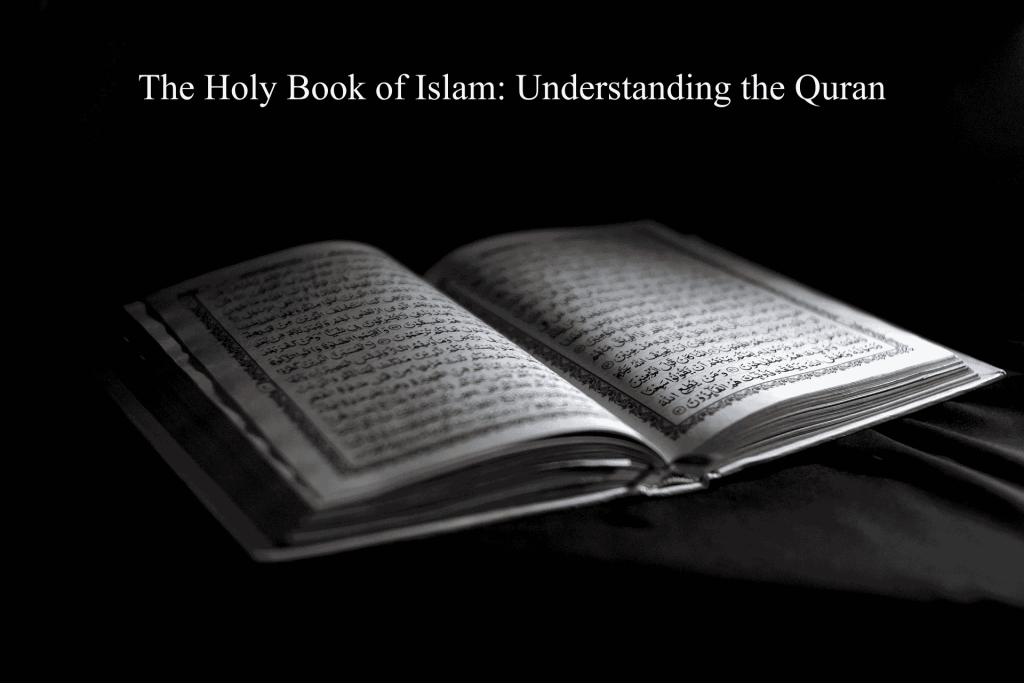
Every major religion has a holy book that guides its followers. In Islam, that holy book is the Quran. Muslims believe the Quran is the literal word of Allah, revealed to Prophet Muhammad (ﷺ) through Angel Jibreel (Gabriel). It is not only a book of worship but also a complete guide for personal conduct, social life, law, and spirituality.
The Quran has remained unchanged for over fourteen centuries, making it one of the most preserved religious texts in human history. This article explores the Quran as the holy book of Islam, its origin, structure, message, preservation, and importance in daily lifeholy book of Islam.
What Is the Quran?
Definition of the Quran
The Quran is the final divine revelation sent by Allah to humanity. It consists of 114 chapters (Surahs) and more than 6,000 verses (Ayahs), all revealed in the Arabic language.
Why It Is Called the Holy Book
The Quran is considered holy because:
-
It is the direct word of Allah
-
It contains divine guidance
-
It is preserved without change
-
It is recited as an act of worship
How the Quran Was Revealed
Beginning of Revelation
The Quran was first revealed in 610 CE when Prophet Muhammad (ﷺ) was in the Cave of Hira near Makkah.
Duration of Revelation
The revelation continued for 23 years, until the Prophet’s death in 632 CE.
Mode of Revelation
Angel Jibreel delivered the verses to the Prophet, who recited them to his companions.
Structure of the Quran
Chapters (Surahs)
The Quran contains 114 Surahs, which vary in length. Some are very short, while others are quite long.
Verses (Ayahs)
Each Surah is made up of verses called Ayahs. The total number exceeds 6,000.
Order of the Surahs
The Quran is not arranged chronologically but according to divine instruction, as taught by the Prophet (ﷺ).
Major Themes of the Quran
Belief in One God (Tawheed)
The Quran emphasizes the oneness of Allah and rejects all forms of polytheism.
Prophethood
It teaches belief in all prophets, including Adam, Noah, Abraham, Moses, Jesus, and Muhammad (ﷺ).
The Hereafter
The Quran describes life after death, the Day of Judgment, Paradise, and Hell.
Moral and Ethical Guidance
The Quran provides guidance on honesty, justice, kindness, patience, and compassion.
The Quran as a Guide for Life
Personal Conduct
The Quran teaches individuals how to live righteous lives, treat others kindly, and maintain moral character.
Family Life
It provides guidance on marriage, parenting, and family responsibilities.
Social Justice
The Quran promotes justice, equality, charity, and care for the poor and oppressed.
Difference Between the Quran and Other Holy Books
Previous Holy Books in Islam
Islam recognizes other holy books revealed before the Quran, including:
-
Torah (Tawrat) – revealed to Prophet Musa (Moses)
-
Psalms (Zabur) – revealed to Prophet Dawud (David)
-
Gospel (Injeel) – revealed to Prophet Isa (Jesus)
Finality of the Quran
Muslims believe the Quran is the final and complete revelation, confirming and correcting previous scriptures.
Preservation of the Quran
Memorization (Hifz)
From the beginning, the Quran was memorized by thousands of companions and continues to be memorized by millions worldwide today.
Written Preservation
The Quran was written during the Prophet’s lifetime and compiled into a book shortly after his death.
Divine Protection
Allah promises in the Quran:“Indeed, We have sent down the Quran, and surely We will preserve it.” (Surah Al-Hijr 15:9)
Language and Style of the Quran
Classical Arabic
The Quran was revealed in classical Arabic, known for its eloquence and depth.
Literary Excellence
The Quran’s language, rhythm, and style are considered unmatched and miraculous.
Quran Recitation as Worship
Importance of Recitation
Reciting the Quran is an act of worship that earns rewards and brings spiritual peace.
Recitation with Tajweed
Proper pronunciation and recitation rules ensure respect for Allah’s words.
Understanding the Quran
Importance of Translation and Tafsir
While the Quran is in Arabic, translations and explanations (Tafsir) help non-Arabic speakers understand its message.
Studying with Knowledge
Understanding the Quran requires learning its context, meanings, and teachings under qualified guidance.
The Quran in Daily Muslim Life
Daily Recitation
Muslims recite the Quran daily, especially during prayers.
Memorization
Many Muslims memorize parts or all of the Quran.
Decision-Making
Muslims refer to the Quran for guidance in personal and social matters.
Teaching the Quran to Children
Importance of Early Education
Teaching children the Quran builds a strong Islamic foundation.
Modern Learning Methods
Today, many families rely on online Quran programs to teach children reading, recitation, and understanding.
Misconceptions About the Quran
“The Quran Was Written by Humans”
Muslims believe the Quran is divine, not authored by humans.
“The Quran Has Been Changed”
The Quran has remained unchanged since its revelation.
“The Quran Is Only for Muslims”
While Muslims follow the Quran, its message is for all humanity.
Scientific and Historical References in the Quran
The Quran contains references to natural phenomena, history, and human development that align with modern scientific understanding, further strengthening belief in its divine origin.
Role of the Quran in Shaping Islamic Civilization
Law and Governance
The Quran forms the foundation of Islamic law (Shariah).
Education and Knowledge
The Quran encourages learning, reflection, and seeking knowledge.
Art and Culture
Quranic calligraphy and recitation have inspired Islamic art and culture for centuries.
Why the Quran Is Called a Miracle
Linguistic Miracle
No one has been able to match the Quran’s language and style.
Preservation Miracle
The Quran’s unchanged preservation over centuries is unmatched.
Guidance for All Times
The Quran remains relevant to every generation and society.
How to Develop a Relationship with the Quran
Read Regularly
Make daily Quran reading a habit.
Reflect on Meanings
Think deeply about the messages and lessons.
Apply Teachings in Life
Living by the Quran strengthens faith and character.
Conclusion
The Quran is the holy book of Islam and the final divine revelation sent to guide humanity. It provides spiritual guidance, moral values, social justice principles, and a complete way of life. Preserved perfectly for over fourteen centuries, the Quran remains a living miracle and a source of light for millions around the world.
Understanding, reciting, and living by the Quran brings peace, purpose, and closeness to Allah. It is not just a book to be read—it is a guide to be lived.
FAQs
What Is the Quran, the Holy Book of Islam?
The Quran is the holy book of Islam. Muslims believe it is the word of Allah (God) revealed to Prophet Muhammad ﷺ through the Angel Jibreel (Gabriel). It is written in Arabic and is the main source of Islamic guidance.
What Is the Quran Explained?
The Quran is a divine message that teaches:
-
Belief in one God (Tawheed)
-
How to worship
-
How to live a moral and just life
-
Stories of past prophets
It guides Muslims in both personal and social matters.
What Is the Holy Book of Islam and Why Is It Important?
The holy book of Islam is the Quran. It is important because it:
-
Provides Allah’s guidance for humanity
-
Forms the basis of Islamic law (Shariah)
-
Is recited daily in prayers
-
Serves as a source of spiritual peace and direction
What Is the Main Point of the Holy Quran?
The main message of the Quran is to worship Allah alone, follow His guidance, live righteously, and prepare for the Hereafter.
Is @ a Symbol of Islam?
No, @ is not a symbol of Islam. It is a modern digital symbol used in email addresses and social media. Islam has no official religious symbol.
What Are 5 Facts About the Quran?
-
The Quran was revealed over 23 years.
-
It contains 114 chapters (Surahs).
-
It is written in classical Arabic.
-
Millions of Muslims have memorized it completely (Hafiz).
-
It has remained unchanged since its revelation.