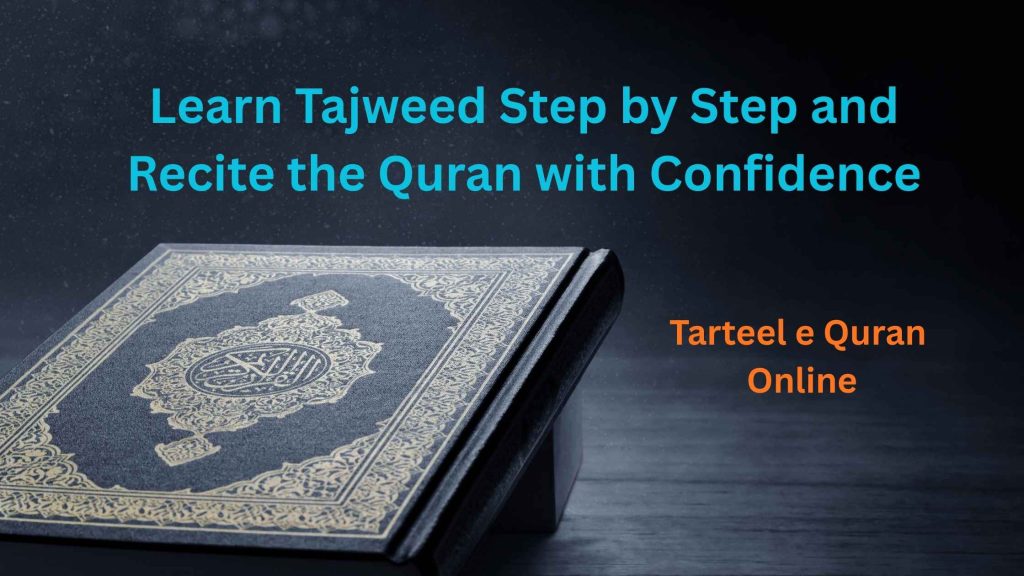
Learning the Quran is more than reading Arabic words—it is about reciting the words of Allah correctly, beautifully, and with understanding. That is why many Muslims today want to learn tajweed step by step, especially beginners who feel overwhelmed by rules, pronunciation, and unfamiliar Arabic sounds. Tajweed is not meant to be difficult or intimidating. When taught gradually, with clear explanations and regular practice, it becomes a natural and rewarding part of Quran recitation. Whether you are a parent teaching your child, an adult starting later in life, or someone looking to improve fluency, learning Tajweed properly helps protect the meaning of the Quran and deepens your spiritual connection. Key concepts like makharij (articulation points), sifaat (letter characteristics), madd, qalqalah, and proper pauses all work together to create balanced and accurate recitation. With patient guidance and a structured approach, students can build confidence, avoid common mistakes, and recite smoothly. At Tarteele Quran Online, we focus on making Tajweed simple, practical, and spiritually uplifting, helping learners of all ages progress step by step toward clear, confident, and heartfelt Quran recitation.
Learn Tajweed Step by Step: A Complete Guide for Every Quran Learner
Learning the Quran is a journey of the heart, and Tajweed is the key that makes this journey beautiful and correct. Many Muslims desire to recite the Quran properly but feel overwhelmed by rules and Arabic pronunciation. The good news is that anyone can learn tajweed step by step with the right guidance, patience, and consistent practice. At Tarteele Quran Online, we believe Tajweed is not difficult when taught in a clear and loving way.
This article is designed for beginners, parents, adults, and even those who feel they are “too late” to start. Whether you are learning for yourself or your children, this guide will help you understand Tajweed from the basics to confident recitation.

What Is Tajweed and Why Is It Important?
Tajweed comes from the Arabic word “jawwada,” which means to improve or make better. In Quranic terms, Tajweed means giving every letter its right and proper characteristics while reciting the Quran.
The importance of Tajweed lies in preserving the original words of Allah as they were revealed. A small mistake in pronunciation can change the meaning of a verse. That is why scholars emphasize that Muslims should learn tajweed step by step rather than rushing through recitation without proper knowledge.
The Spiritual Value of Learning Tajweed
Reciting the Quran with Tajweed is not only about correct pronunciation; it is also about spiritual connection. When you recite properly, your heart becomes more engaged, and your recitation becomes more peaceful and meaningful.
The Prophet Muhammad ﷺ said that those who recite the Quran beautifully will be with the noble angels. This hadith alone is a powerful motivation to learn tajweed step by step and improve your relationship with the Quran.
Who Should Learn Tajweed?
Tajweed for Children
Children absorb sounds quickly, which makes early Tajweed learning very effective. Teaching children correct pronunciation from the start prevents bad habits later. At Tarteele Quran Online, we use child-friendly methods to help young learners learn tajweed step by step with confidence.
Tajweed for Adults
Many adults hesitate to start Tajweed because they feel shy or think it is too late. In reality, adults often learn faster because they understand rules logically. With online classes and patient teachers, adults can easily learn tajweed step by step from the comfort of home.
Learn Tajweed Step by Step: Start with the Arabic Alphabet
The first step in Tajweed is mastering the Arabic alphabet (Huruf Hijaiyah). Each letter has a unique sound that must be pronounced correctly from its origin point.
At this stage, students focus on recognizing letters, distinguishing similar sounds, and learning basic articulation. This foundation is essential before moving forward to advanced Tajweed rules.
Understanding Makharij: Where Letters Come From
What Are Makharij?
Makharij are the articulation points from which Arabic letters are pronounced. There are five main areas of articulation, including the throat, tongue, lips, nasal passage, and mouth.
To learn tajweed step by step, students must understand where each sound originates. This prevents common mistakes such as mixing similar letters like س and ص or ت and ط.
Sifaat: The Characteristics of Letters
Sifaat describe how letters behave when pronounced, such as heaviness (tafkhīm) or softness (tarqīq). Some letters are heavy, while others are light, and some can be both depending on context.
Learning Sifaat helps students refine their recitation and sound more fluent. This stage brings beauty and precision to Quran recitation.
Rules of Noon Saakin and Tanween
Why These Rules Matter
Noon Saakin and Tanween rules are among the most commonly applied in Quran recitation. These include Izhar, Idgham, Iqlab, and Ikhfa.
When students learn tajweed step by step, they practice these rules repeatedly until they become natural. These rules improve flow and prevent awkward pauses or incorrect sounds.
Rules of Meem Saakin Explained Simply
Meem Saakin rules are similar to Noon Saakin but easier to apply. They include Ikhfa Shafawi, Idgham Shafawi, and Izhar Shafawi.
Mastering these rules ensures clarity in recitation and avoids merging sounds incorrectly. With guided practice, learners quickly gain confidence.
The Importance of Madd (Prolongation)
Madd refers to stretching certain sounds for a specific duration. Some Madd are short, while others require longer elongation.
Incorrect Madd can disturb the rhythm of recitation. That is why Tajweed teachers emphasize Madd rules when students learn tajweed step by step, ensuring correct timing and balance.
Qalqalah: The Echoing Letters
Qalqalah letters create a slight echoing sound when pronounced with sukoon. These letters are ق ط ب ج د.
This rule adds strength and clarity to recitation. Practicing Qalqalah properly helps avoid weak or unclear pronunciation.
Common Tajweed Mistakes and How to Avoid Them
Many learners make similar mistakes, such as rushing, ignoring Makharij, or reading without listening to corrections. These mistakes are normal but should be corrected early.
At Tarteele Quran Online, teachers gently correct students and help them learn tajweed step by step without pressure or embarrassment.
Why Learning Tajweed Online Is Effective
Online learning allows students to learn at their own pace with qualified teachers. One-on-one sessions make it easier to focus on individual mistakes.
Students from around the world choose online platforms to learn tajweed step by step without traveling or fixed schedules.
Our Teaching Approach at Tarteele Quran Online
Structured and Student-Friendly
Our academy follows a structured curriculum designed for beginners and advanced learners alike. Each lesson builds on the previous one, making learning smooth and stress-free.
Qualified and Patient Teachers
Our teachers are trained in Tajweed and experienced in teaching students of all ages. They understand common difficulties and help students overcome them with encouragement.
Practice: The Key to Mastering Tajweed
Learning rules alone is not enough. Daily practice, listening to Quran reciters, and repeating lessons are essential.
Students who learn tajweed step by step and practice consistently see noticeable improvement within weeks.
How Long Does It Take to Learn Tajweed?
The time required depends on the student’s dedication and practice routine. Basic Tajweed can be learned within a few months, while mastery takes longer.
The goal is not speed but accuracy and consistency. Slow and steady progress leads to long-term success.
Tajweed and Fluency Go Hand in Hand
As students improve in Tajweed, their fluency naturally increases. Recitation becomes smoother, more confident, and more enjoyable.
This transformation motivates learners to recite the Quran more often and with deeper reflection.
Building a Lifelong Relationship with the Quran
When you learn tajweed step by step, you are not just learning rules—you are building a lifelong connection with the Quran.
Proper recitation brings peace to the heart and strengthens faith in daily life.
Start Your Tajweed Journey Today
Learning Tajweed is a beautiful act of worship that brings immense reward. No matter your age or level, it is never too late to start.
At Tarteele Quran Online, we are honored to help students learn tajweed step by step in a supportive, professional, and spiritually uplifting environment.
Final Thoughts
The Quran deserves to be recited the way it was revealed. Tajweed protects the words of Allah and enhances their beauty.
If you are serious about improving your recitation, take the first step today. With dedication, guidance, and sincere intention, you can learn tajweed step by step and recite the Quran with confidence and love.
FAQ Answers
Q1: How to learn Tajweed easily?
A: You can learn Tajweed easily by starting step by step with the basics, such as Arabic letters, their pronunciation (Makharij), and simple Tajweed rules. Consistent practice with a qualified teacher or a structured online course makes learning much smoother.
Learning Tajweed becomes easier when you don’t rush. Begin with letter sounds, then move to rules like Noon Sakinah, Meem Sakinah, and Madd. Listening to slow recitations and correcting mistakes regularly helps build confidence and accuracy over time.
Q2: What are the 7 rules of Tajweed?
A: The 7 main rules of Tajweed include rules related to pronunciation, elongation, merging, clarity, and stopping correctly while reciting the Quran. These rules ensure the Quran is recited exactly as it was revealed.
Commonly taught Tajweed rules include Makharij (articulation points), Sifaat (characteristics of letters), Noon Sakinah and Tanween, Meem Sakinah, Madd (elongation), Qalqalah, and Waqf (stopping rules). Learning these rules helps preserve the meaning and beauty of Quranic recitation.
Q3: What are the 4 rules of Tajweed?
A: The 4 basic rules of Tajweed usually refer to the rules of Noon Sakinah and Tanween: Izhar, Idgham, Iqlab, and Ikhfa. These rules explain how certain letters should be pronounced in different situations.
These four rules are often the first Tajweed rules beginners learn because they appear frequently in the Quran. Mastering them greatly improves fluency and prevents common pronunciation mistakes during recitation.
Q4: Can Tajweed be self-taught?
A: Yes, Tajweed can be self-taught to some extent using books, videos, and apps, but learning with a teacher is highly recommended. A teacher helps correct mistakes that are hard to notice on your own.
Self-learning works well for understanding theory, but proper pronunciation requires feedback. Even occasional guidance from a qualified Quran teacher can significantly improve accuracy and confidence in recitation.
Q5: Is the Quran 100% correct?
A: Yes, Muslims believe the Quran is 100% correct, preserved, and unchanged since it was revealed to Prophet Muhammad ﷺ. It is considered the literal word of Allah.
The Quran has been memorized and transmitted accurately for over 1,400 years. Historical manuscripts and modern copies match perfectly, which strengthens the belief in its authenticity and preservation.
Q6: Which word is repeated 365 times in the Quran?
A: The word “Yawm” (day) is commonly said to be repeated 365 times in the Quran, symbolizing the number of days in a year. This is often mentioned as a reflection point rather than a core belief.
Different scholars note that word counts can vary based on grammatical forms and counting methods. Regardless, such patterns encourage reflection on the Quran’s depth, structure, and linguistic richness